Politics form a huge part of the culture of any country. In India, however, it almost acts as a religion. People follow the leaders through generations, and ideologies are passed on in the name of tradition. These simple people buy into the fake promises made to them by politicians and are willing to do anything they say without giving it a second thought. This has led to many events such as riots, unrest and lootings in the past.
The more one tries to look through these politics, the murkier they seem to become. There seem to exist no boundaries politicians will not push to get what they want — be it power, votes, money or anything else. The help of institutions such as the media and the police is often enlisted in such endeavours.
Even though the media is supposed to remain impartial in such matters, that is hardly the case. This is something in countries all across the world and is not specific to India. News channels and broadcasters are often bought by political parties, and they are then expected to endorse and defend them. Similarly, the police is purchased and used strategically by those in power to put down their opposers. The police power is bribed with power and money for these tasks, and their powers are hence largely exploited in this manner. The media houses and police have a lot of influence over many naïve citizens of India, who then also start getting brainwashed and misled by the very systems they are supposed to believe in. Such corrupt systems really fail no one else but the common man; and in the death of the sensibility of the common man, lies the impending death of the nation.
These matters have been at the core of many Bollywood movies: most notably, 2000’s Phir Bhi Dil Hai Hindustani (PBDHH) and 2010’s Raajneeti. Despite these films being 10 years apart from each other, and being relatively old today, they still remain as relevant as ever. Corruption remains rampant, and it is still the common man who feels the brunt of it all. Both of these movies depict beautifully the complex relationship that exists between various political representatives and parties, the police system that remains under them, the media channels that show only what they have been paid to without responsibility, and the common man, who serves either as an ignorant onlooker or as the victim of this unjust structure.
PBDHH tells the tale of two reporters, played by Shah Rukh Khan and Juhi Chawla, from rival media channels who must work together to bring a wrongly accused man to justice. They fight against bureaucratic systems involving their superiors and politicians, to untangle a dirty web kept together by the power of money. It gives a commentary to the extremes to which news channels read to gain attention, and how personal gain always seems to outweigh the common good. Raajneeti, on the other hand, regales the story of a fight for power. With the support of its stellar cast, including Ranbir Kapoor, Arjun Rampal and Manoj Bajpayee, the movie narrates the truths and horrors of a dirty political fight, which do not seem too far from the daily news.
Despite both these stories being told from different perspectives — the first from that of the common man, the latter from that of the politician — they both succeed in bringing to light these hidden truths of society, giving us multiple warnings of what might come to pass if such existing structures are not dealt with and rectified.
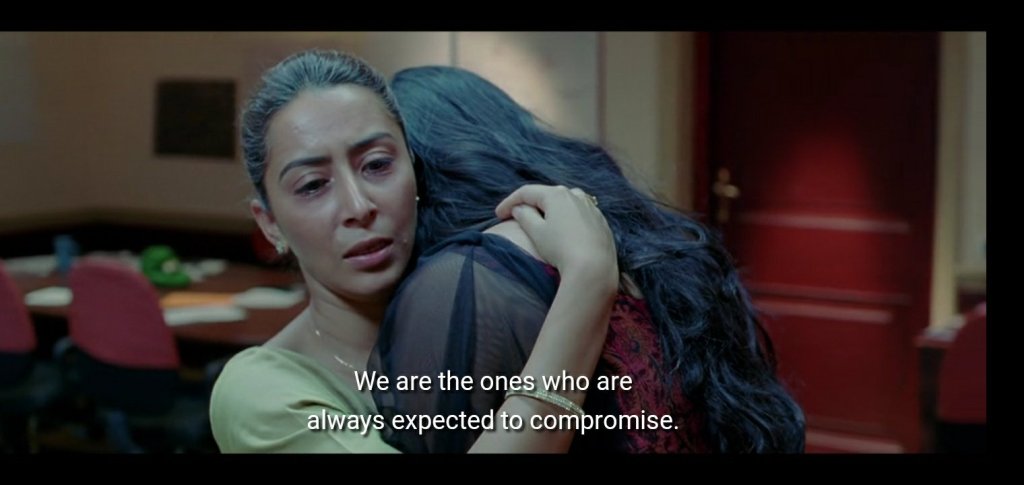
Heavily inspired by the Mahabharata and with multiple references being made to real life people and events, Raajneeti has many layers to unwrap. Some obvious allusions to the epic text include the character of Sooraj, the Dalit leader, as Karna; Brij Gopal as Krishna; Veerendra as Duryodhana; and Samar as Arjun, among others. Other sequences of the movie have been accused at hinting at various instances in real Indian politics as well. The rise of Kaif’s character Indu as the Chief Minister, for example, became the reason the film was almost denied a certification as it had parallels to the growth of Indian National Congress’ leader Sonia Gandhi and her entry into politics following her husband’s death. Kaif’s costumes of khadi saris as she campaigns in the movie and the similarity between her and Gandhi’s lives with their foreign origins do not play in the film’s favour. Comparisons may also be made with the first female Prime Minister of India, Indira Gandhi. Besides the character’s name being a direct derivative of the infamous leader, the character being the first female leader of her territory mirrors Indira Gandhi’s political career. The film’s very candid take on the general role of women in politics, the treatment of the minorities, media, and use of violence also proved obstacles in getting the certification. Its realistic depiction of how easily the police and media can be bribed and swayed by the ambitious politicians, and how they are only seen as pawns to be played in a larger battle is a scary reflection of the politics of today.
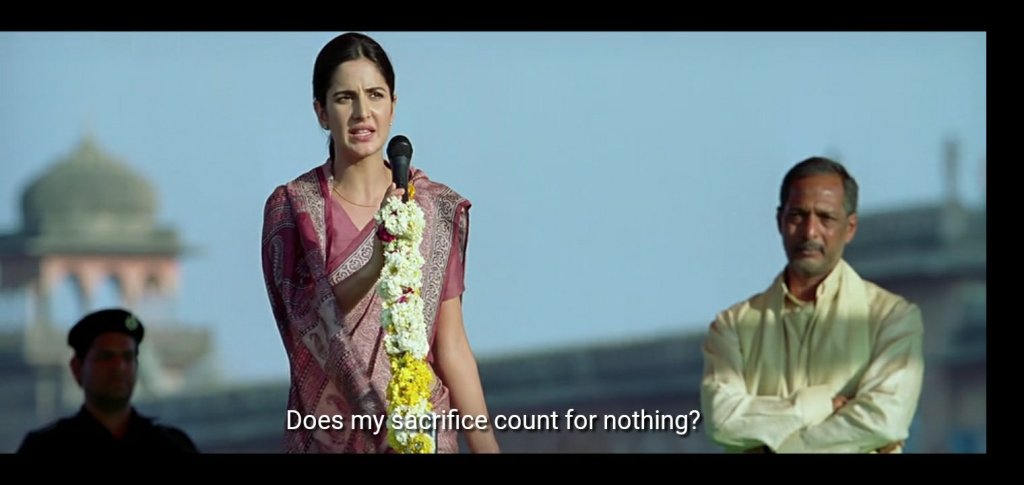
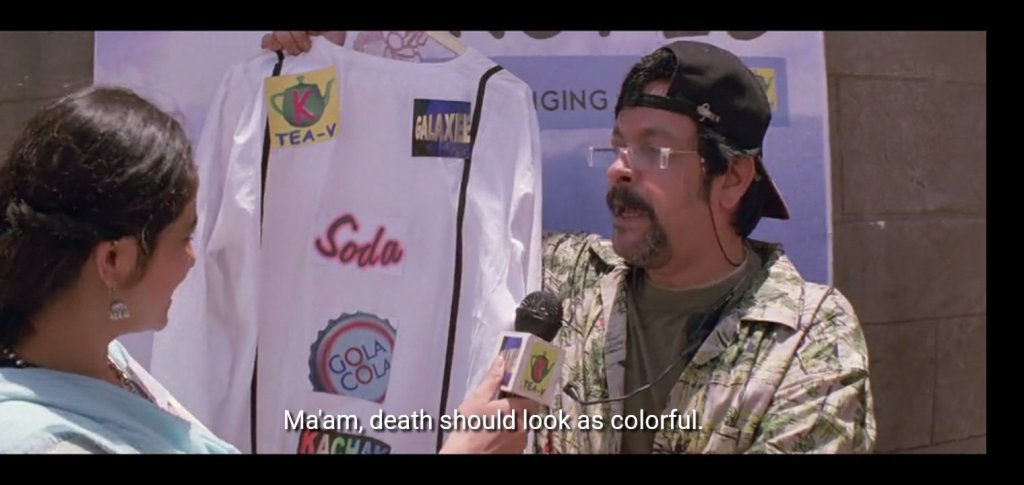
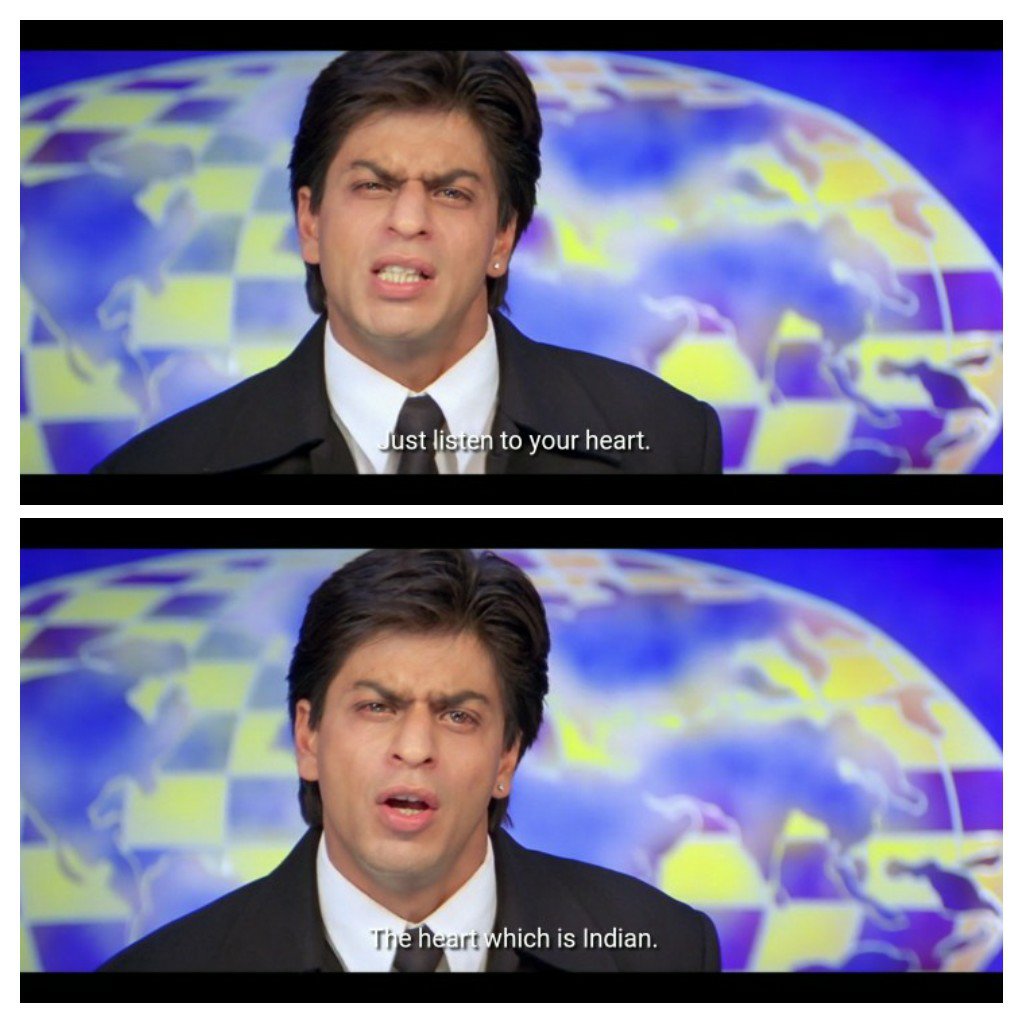
PBDHH shows the audience the other end if the spectrum. It depicts the common man’s struggles under a bureaucratic web that only thinks for itself. It also gives a clever commentary on the importance of television and press as forms of media to be able to connect to the larger masses. The police commissioner is shown to be bullied by members of opposing political parties into telling lies to the press, saying “if it’s a lie, make it the truth by giving it the government’s approval” and ending the conversation with a “Jai Hind; confused, he takes his own stand and says that the accused is a “foreign terrorist”. Mass riots are seen to be orchestrated by political personas who them condemn violence in front of the people and their rivals are seen putting a communal edge to them, for his own benefit. Capital punishment is being given a live telecast, with producers going crazy trying to promote their brand by putting their logos on the man’s dress. When asked the executioner about his views, he says “my mind and heart contradict each other”, and his wife is made the basis of a quiz with a prize in a desperate tactic to gain even more viewers. Everyone is thinking for their own profit, and no one thinks for the common man, except the common man. The journalists, who act as a bridge between the world of the autocracy and the public discover the truth and keep running various conspiracies in order to bring about justice. It is only heartfelt appeal by Khan’s character to the Indian conscious of the public that helps bring all the wrongs right.
Behind the glamour of this Bollywood world, lies a very real truth, which can be hard to accept. In what is called the “world’s biggest democracy”, these hypocrisies in between the rings of dons, the press, the police, and the politicians is so tightly wound, unwinding it become the things of nightmares.
In the end of both these tales, the victim if the mass public; it does not matter to if they are killed or what they are made to believe as long as in the end, the means of the authorities are achieved. in such a system, we need the common people to awaken and take things into their own hands to bring about some change: just as the Ria Banerjee and Ajay Bakshi did and succeeded to some effect.
Both these movies have served as warnings for the future it saw. Both movies did not do as well as one would expect at the box office. As is argued that is with many other films that deviated from the mainstream, these movies were not something Indian audiences were ready for at the time. Even though Raajneeti did earn something at the box office, PBDHH was severely attacked by critics and audiences alike. In actor- producer Juhi Chawla’s words, “When we made the film, the media was just beginning to explode, it was too early to talk about channel wars, TRPs, etc. There was so much behind-the-scenes politics, about politicians etc, that probably people didn’t get the nuances at that time.”. But decades later as fake news and media manipulation are widespread, and politics have hardly been darker, these films offer a view of what the future might turn out to be if this carries on unchecked. Cinema has always had potential to warn us about our future by taking examples from our past and make it appealing and informative at the same time: something not many other forms of media can achieve at his large a scale. It would be wise if we take heed of what cinema is trying to tell us and not just dismiss it as another form of entertainment.

 Malik's Movie Reviews