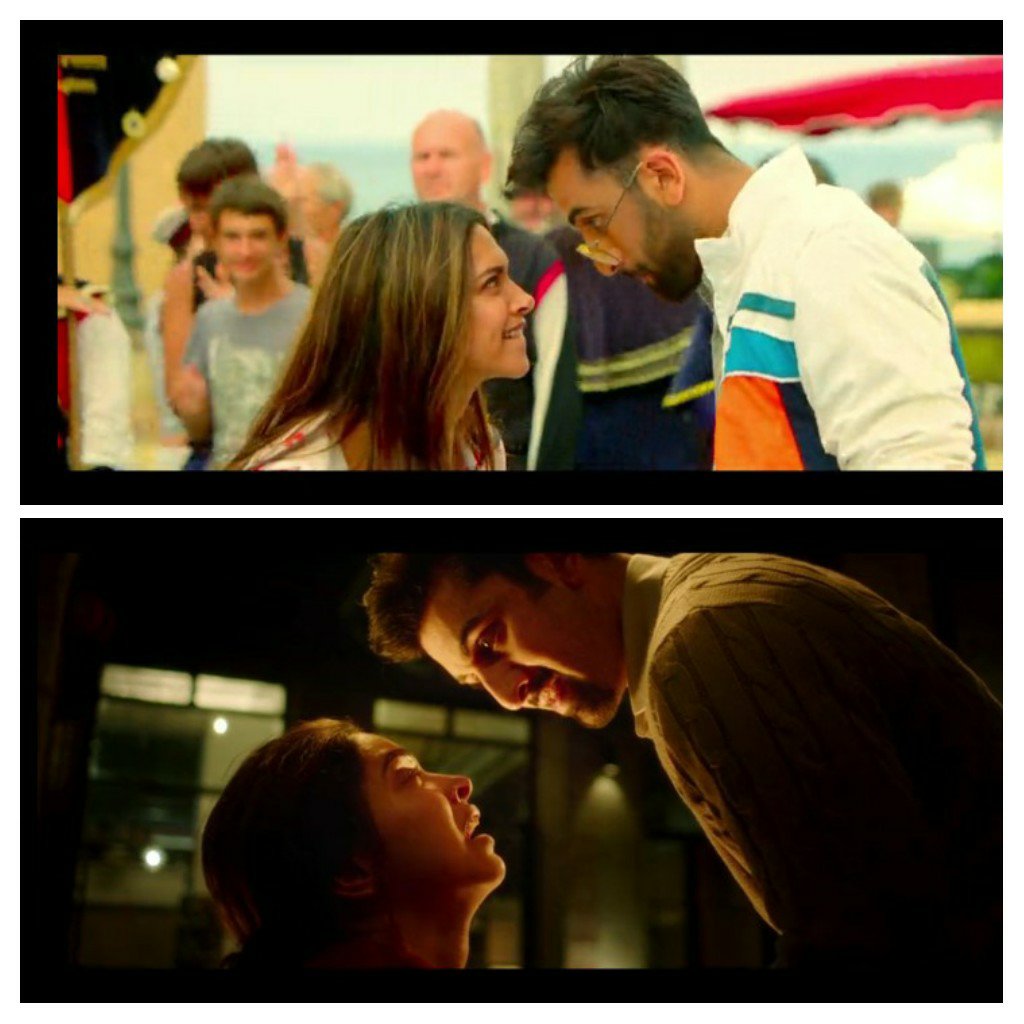
“Tujhe toh pyaar ho gaya hai, pagli.” (You’ve fallen in love, silly girl)
“Haan. Haan, Ved” (Yes. Yes, Ved.)
“Par kisi aur se.” (But with someone else.)
Ved starts to sing “Tu kisi aur ki jaageer hai” (you are somebody else’s prize). He stops abruptly, seemingly coming to his senses, and tells her that he doesn’t trust himself around her, and that he should leave before he causes any more trouble to an already strained relationship. When Tara apologizes again, he slips into character to mock her again, and then comes back, questioning what he becomes around her, her effect on him, her ‘negative’ energy: “Yeh kya ban jaata hoon mein tumhare saamne?” (What do I become in front of you?)
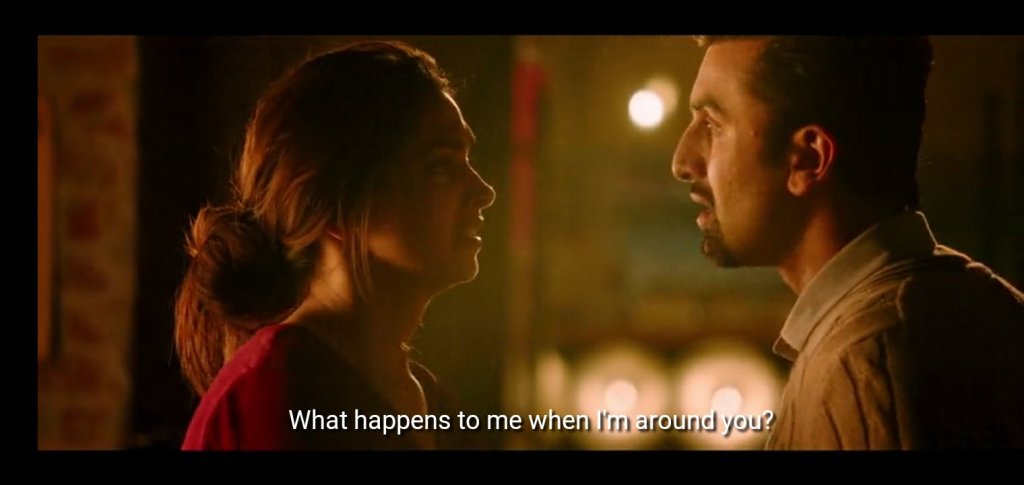
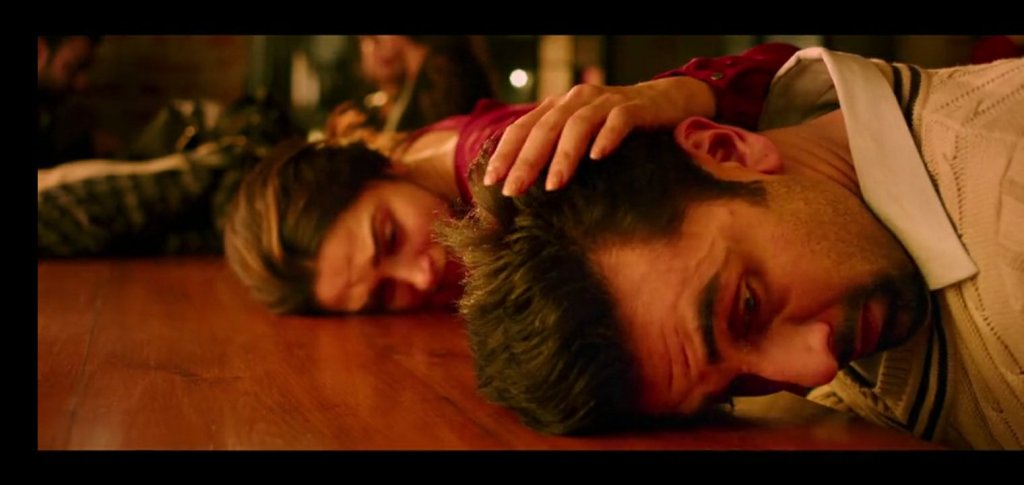
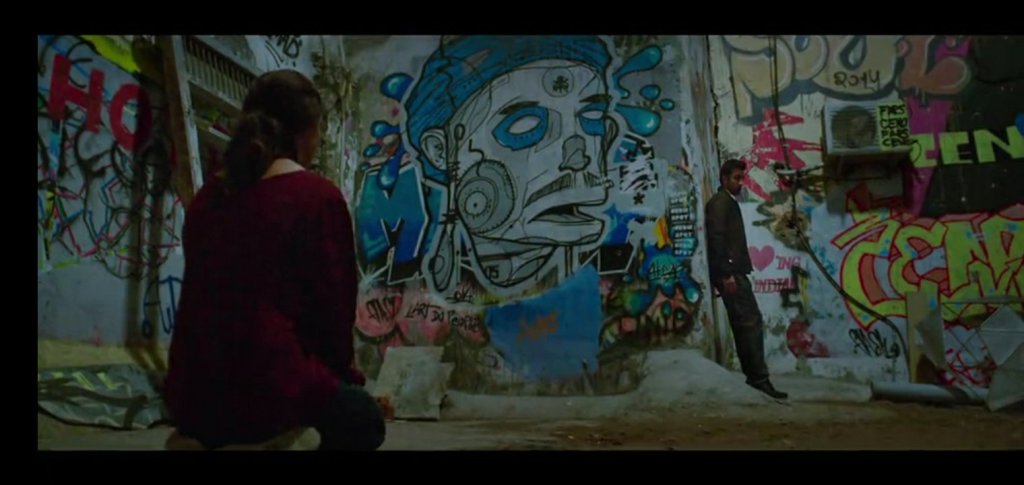
He turns to leave again, but Tara holds on even harder, promising to fix things. He struggles to loosen her grasp; she manages to pull him into a hug. He stays there for a minute, before escaping her grip to sit down again, and it is at this moment that ‘Agar Tum Saath Ho’ starts playing with the so apt line “Pal bhar theher jao, dil yeh sambhal jaye” (Stay for a moment, let the heart settle). Tara sits down next to him and starts mirroring his actions, placing her head on the table alongside his. They look at each other for a second, and then Ved looks away, as if ashamed of himself. She inches closer to him, places her hand on his head, and a tear falls from his eye at that moment; he leaves in a hurry, with Tara’s head still on the table. He puts on another jacket as he does, overcompensating to cover up his moment of vulnerability with Tara. He meanders through the lanes of Hauz Khas to find a spot of seclusion. Tara tries to go after and look for him; she almost misses him when she does. Ved hides behind a graffitied wall, in the darkness; a reflection of how his colourful self hides behind the plain, formal suit. Tara slowly sits down on her knees in an act of surrendering. Ved goes and leaves her there alone, yet again.
These lines capture the whole essence of the movie — Ved sees his character of ‘Don’ as someone apart from himself, while she knows it to be the real him. He’s convinced himself that this routine bound product manager is his reality, but Tara easily and rightly sees through this act; her “negative” energy and effect is a form of catharsis for him. Ved is aware of this, and it scares him how easily she can break his version of the truth. Ali said in an interview, describing Ved, “Sometimes you really fear those people who see through you”, and that fear is so visible in this interaction between these characters.
This is the scene that gives a lot of insight into Tara’s character. She has been depicted as a strong, independent woman throughout the whole film; she breaks up with her old boyfriend after coming back from Corsica without a second thought, she shoulders on her father’s company while dealing with heartbreak, she sees her image of Don break down into Ved. But now, when she sees the man she loves collapsing, she can’t help but collapse too, alongside him. It is one of my firm beliefs that this movie is as much about Tara as it is about Ved, if not more. She is the character introduced first, and it is through her that Ved finds himself.
And that is the genius of director Imtiaz Ali: in one scene, he is able to deliver so many emotions and layers to a character without directly saying anything. He turns such a private situation into a public tamasha, reflecting the turmoils present in almost everyones life. This is only one of the layers that Tamasha has to offer, and it is a movie teeming with subtleties, symbolism, and meaning. Multiple rewatches bring to clear sight yet more layers and that is why Tamasha is considered a cult film and remains relevant even today.

 Malik's Movie Reviews